Why enterprises choose XTM for serious localization
Smartcat does the job if all you need is a quick translation here and there. But once your business starts growing and you need proper workflows, better context, and more control, its limitations show fast. XTM is built for teams that need real structure, automation, and visibility across their localisation efforts.










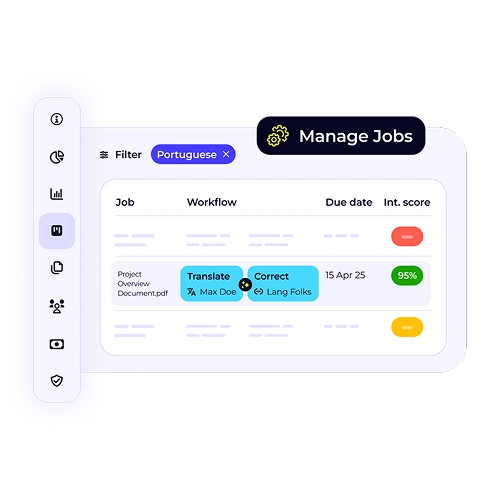
Real workflow automation
XTM gives you structured, logic-based workflows. Smartcat uses a crowd-based task model that’s harder to control at scale.
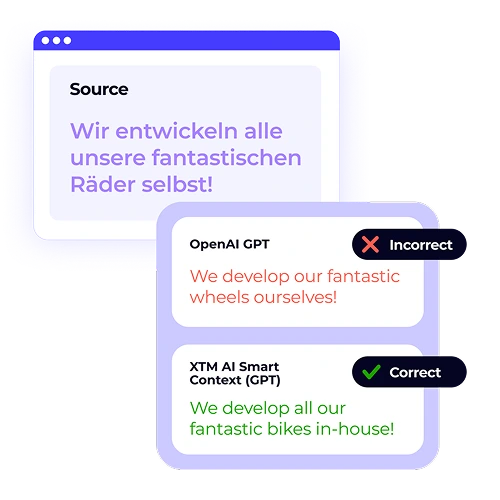
True visual context
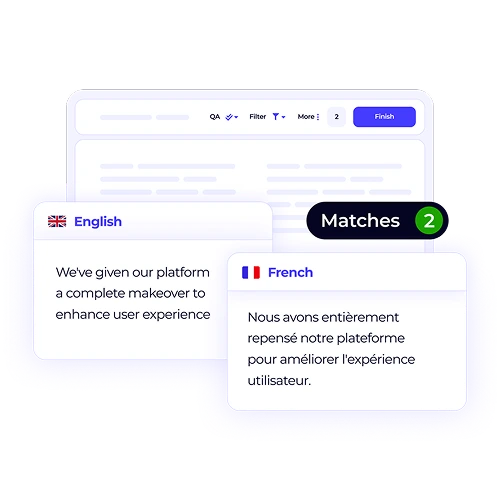
XTM’s SmartContext provides full file previews for formats like HTML, InDesign, and XML. Smartcat only offers isolated string-level views.
Transparent AI, your way
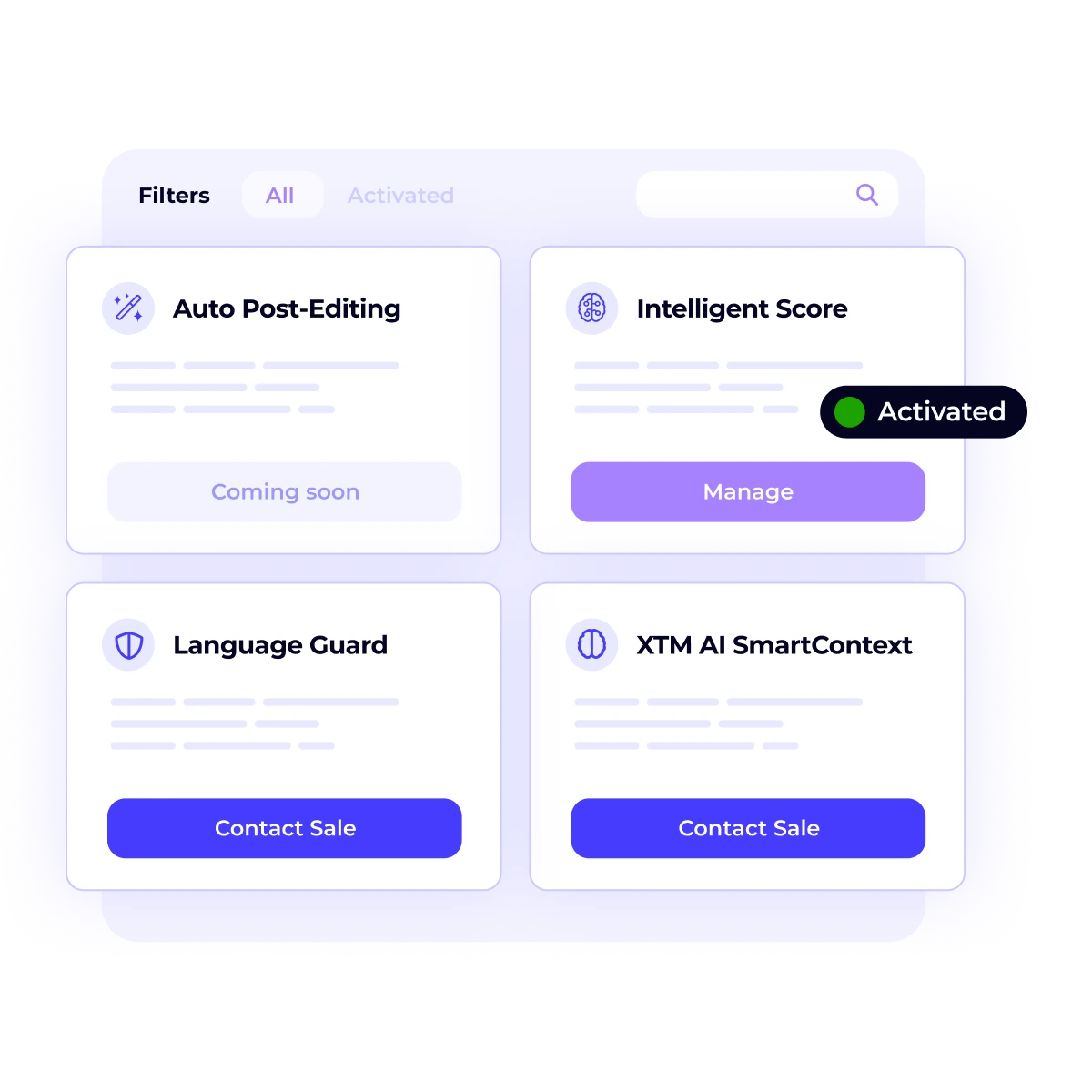
With XTM, you can plug in your own AI keys and see exactly how scoring works. Smartcat doesn’t reveal which models it uses or how results are generated.
Businesses using XTM see faster turnaround times, fewer errors, and consistent quality across languages and channels.
Reduction in translation errors
Cost saving with machine translation
Faster time-to-market
It’s mostly about scale and control. Smartcat leans towards small teams and freelancers working on ad hoc projects. That’s fine at first — until you hit issues with consistency, governance, or quality control.
XTM, on the other hand, is built for serious localisation. It gives you everything you need to manage translation at scale, from custom workflows to secure deployments and detailed oversight. A lot of companies start with Smartcat but move to XTM once they need something more robust.



XTM provides transparent enterprise pricing without hidden fees for essential features like advanced AI or premium connectors. Smartcat’s marketplace model can create unpredictable costs as project complexity increases and you need more control over linguist selection and quality assurance processes.
Yes, XTM supports all major file formats that Smartcat handles, plus provides superior visual context through SmartContext technology. Unlike Smartcat’s string-level approach, XTM shows translators how content appears in its final format, reducing errors and revision cycles for complex documents.
XTM provides complete AI transparency with features like Intelligent Score, Language Guard, and support for bringing your own AI keys. Smartcat’s AI remains largely opaque with limited documentation about which models are used or how quality decisions get made, creating compliance challenges for regulated industries.
XTM provides advanced collaboration tools within a controlled enterprise environment rather than Smartcat’s open marketplace approach. You get structured workflows, role-based permissions, and audit trails whilst maintaining complete control over who accesses your content and translation memories.
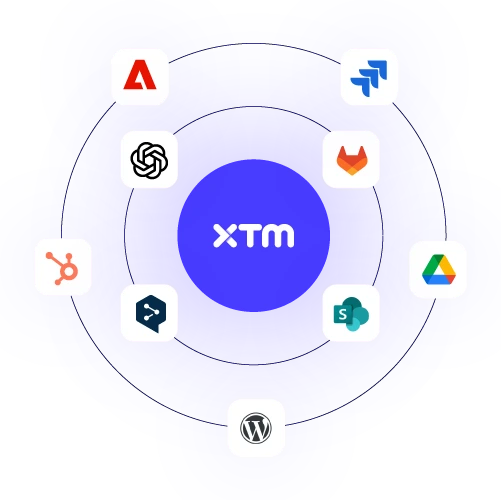
XTM offers over 60 native integrations compared to Smartcat’s more limited connector ecosystem. The integrations marketplace includes deep connections to CMS platforms, development tools, and marketing systems that automate content flow without manual intervention.
XTM provides enterprise-grade TM governance with complete separation between organisations and controlled contribution processes. Smartcat’s crowd-sourced TM sharing model can dilute your linguistic consistency as approved terminology gets mixed with translations from other companies and projects.
Yes, XTM offers flexible deployment options including SaaS, private cloud, and on-premise installations. Smartcat operates as SaaS-only, which creates compliance challenges for regulated industries that need specific data residency or security controls for sensitive content.
XTM’s business intelligence dashboards provide comprehensive visibility across all connected systems and translation workflows. You can track progress, identify bottlenecks, and measure localization impact through unified reporting that Smartcat’s marketplace-focused approach cannot match.
Dig deeper into how XTM delivers faster localization, greater control, and real ROI—so you can make the right call for your team.